Seafood dining continues to grow in popularity across the United States, driven by evolving tastes, rising interest in healthier proteins, and expanding fast-casual concepts. Fishbone Seafood is one of the emerging franchise opportunities in this category, offering Southern-style seafood and fried favorites in a flexible restaurant model. The brand positions itself as a community-oriented, affordable seafood concept with options ranging from full dine-in to delivery-focused setups. If you’re considering a seafood franchise, this guide breaks down everything you need to know to evaluate Fishbone Seafood as a potential investment.
🍤 What Is Fishbone Seafood?
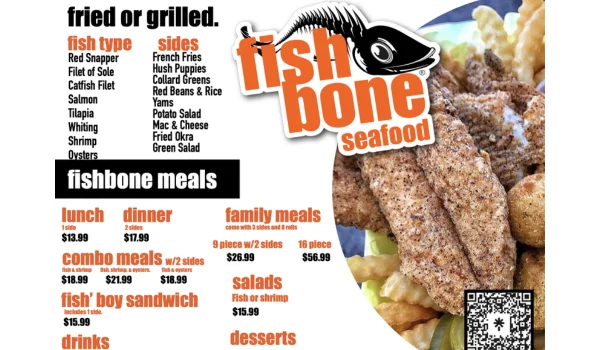
Fishbone Seafood is a fast-casual restaurant concept specializing in Southern-style seafood — such as fried catfish, shrimp baskets, oysters and grilled fish — prepared fresh daily. The concept blends classic comfort seafood with approachable pricing and aims to attract families, seafood lovers, and everyday diners seeking a quick, flavorful meal. The brand also explores flexible operating formats including brick-and-mortar restaurants, ghost kitchens for delivery, and food trucks.
💰 Fishbone Seafood Franchise Cost & Investment
The estimated investment varies based on the format you choose — traditional restaurant, ghost kitchen or mobile food truck/unit. Here’s what current listings and brand materials indicate:
1️⃣ Traditional Brick-and-Mortar Location
| Expense Category | Estimated Amount |
| Franchise Fee | ~$30,000 |
| Estimated Total Investment | $150,000 – $250,000 (includes franchise fee) |
| Buildout / Leasehold Improvements | Varies by location |
| Kitchen Equipment & POS | Varies by format |
| Initial Inventory & Supplies | Included in estimate |
The minimum initial investment listed by the brand (which includes the franchise fee) starts at about $150,000 — though most full locations can climb higher based on real estate and buildout costs.
2️⃣ Ghost Kitchen / Delivery-Only Format
| Format | Estimated Investment |
| Ghost Kitchen | $30,000 – $50,000 |
This model focuses on delivery apps and direct online ordering without dine-in space.
3️⃣ Food Truck / Mobile Unit
| Format | Estimated Investment |
| Food Truck | $50,000 – $100,000 |
A flexible, event-driven model where products are prepared on a mobile unit.
📦 Franchise Fee, Royalty & Ongoing Fees
The brand’s primary franchise fee is approximately $30,000 — the upfront cost paid to secure rights to open and operate a Fishbone Seafood location.
Public franchise directories note that Fish Bone (a similar concept cited in franchise databases) typically charges a franchise fee of around $50,000 and an ongoing royalty fee near 5% of gross sales. Depending on the system you evaluate, these figures give a realistic range for planning purposes — but you should confirm the exact numbers with the franchisor before signing any agreement.
| Fee Type | Typical Range |
| Franchise Fee | ~$30,000 – $50,000* |
| Royalty Fee | ~5% of gross sales* |
| Marketing Fund | Varies (confirm with FDD) |
*Based on available data from multiple franchise resources; confirm exact amounts with Fishbone Seafood’s franchise team.
📈 Profit Potential & Business Economics
The profitability of a Fishbone Seafood franchise will depend heavily on several critical factors:
- Location & local seafood demand
- Operational efficiency
- Delivery & takeout penetration
- Food cost control (seafood pricing can fluctuate)
Comprehensive financial performance figures (such as average unit volume) are not published publicly — and prospective franchisees should request Item 19 Financial Performance Representations in the Franchise Disclosure Document (FDD) for precise sales and profit data.
However, industry trends for fast-casual seafood concepts suggest that profit margins in the range of 12%–20% are possible for well-run restaurants. Delivery and ghost kitchen formats can yield higher labor efficiency and lower fixed costs, potentially improving margins.
📍 Restaurant Formats & Location Strategy
Fishbone offers several operational formats:
1️⃣ Brick & Mortar
Traditional dine-in or counter service with seating and full kitchen. Best in high-traffic commercial areas, shopping centers, and busy suburban strips.
2️⃣ Ghost Kitchen
Optimized for delivery apps and online ordering. Ideal for urban locations with strong delivery demand and lower real estate costs.
3️⃣ Food Trucks
Mobile presence at festivals, local events, and community gatherings — perfect for seasonal revenue spikes and brand awareness.
Choosing the right model depends on your market, budget, and business preference. Ghost kitchens can significantly reduce upfront investment compared to traditional locations.
🎁 Franchise Support & Training
Fishbone Seafood states that it provides ongoing support for franchisees, including:
- Initial training and onboarding
- Operational guidance
- Marketing and promotional support
- Vendor and supply chain recommendations
Training ensures franchisees understand the menu, preparation standards, customer service, safety protocols, and point-of-sale systems, helping maintain brand quality — especially important with seafood products.
📝 Eligibility & Requirements
While Fishbone Seafood does not publicly list specific minimum net worth or liquid capital requirements, successful franchise applicants typically must:
✔ Have sufficient capital to cover the estimated investment range
✔ Show a solid credit history
✔ Demonstrate the ability to operate or hire experienced management
✔ Be willing to follow brand SOPs and maintain quality standards
Some franchise directories suggest that partners interested in a Fishbone opportunity should prepare a minimum of $50,000–$150,000 in liquid assets, depending on whether they pursue a ghost kitchen, mobile unit, or full restaurant.
📄 How to Apply for the Franchise
Here’s the step-by-step process most franchisors (including Fishbone) follow:
- Submit a franchise inquiry on the official Fishbone Seafood site or contact form.
- Receive the Franchise Disclosure Document (FDD) and investment sheet.
- Review the FDD with a franchise attorney and CPA.
- Discuss location strategy and obtain approval for a site.
- Sign the franchise agreement and pay the franchise fee.
- Complete training and prepare for launch.
- Open your location with grand-opening support and marketing.
Always confirm the franchisor’s exact process and timelines, as these can vary.
👍 Pros of Owning a Fishbone Seafood Franchise
✔ Lower investment than many full-service seafood brands (starting near $150,000).
✔ Multiple business formats (traditional, ghost kitchen, truck) — flexibility for different markets.
✔ Growing demand for fast-casual seafood and delivery options.
✔ Established brand philosophy rooted in quality seafood and Southern flavors.
👎 Cons & Risks to Consider
❌ Seafood cost fluctuations — seafood pricing can be volatile and affect margins.
❌ Limited public financial data — harder to benchmark earnings without FDD Item 19.
❌ Operational complexity — seafood handling and quality standards require strong management.
❌ Competition — QSR seafood and regional fried-seafood brands can be competitive.
📌 Final Thoughts
The Fishbone Seafood franchise presents an appealing entry point into the fast-casual seafood segment with multiple operating models and a relatively moderate initial investment compared to traditional full-service restaurants. With growing consumer interest in seafood and on-demand delivery, the concept aligns well with current foodservice trends.
However, due diligence is critical — especially regarding actual earnings, franchise support depth, location approvals and supply chain arrangements. Always review the current FDD, speak with existing franchisees if available, and consult financial professionals before committing.
About the Author