If you’ve ever dreamed of owning a restaurant franchise tied to an iconic American food brand known for hand-crafted steakburgers and milkshakes, the Steak ’n Shake franchise might have caught your attention. With nearly a century of history and a renewed growth strategy based on franchising, this legendary chain is offering entrepreneurs an opportunity to own and operate new locations — some for relatively low upfront investment. In this detailed and easy-to-understand guide, we’ll walk you through everything you need to know, from costs and fees to eligibility, profit potential, and how to apply.
🍔 What Is Steak ’n Shake?
Steak ’n Shake is a classic American restaurant brand founded in 1934 in Normal, Illinois, and known for its premium Steakburgers and hand-dipped milkshakes. Traditionally a sit-down diner with counter service and classic comfort food, the company has reinvented itself over the years with newer formats that integrate drive-thru, takeout, and modern quick-service elements.
Under new franchising efforts, Steak ’n Shake is actively converting many company-operated restaurants to franchise partnerships — giving qualified operators a path to ownership with lower upfront capital than typical full-service restaurant franchises.
💰 Franchise Cost & Total Investment
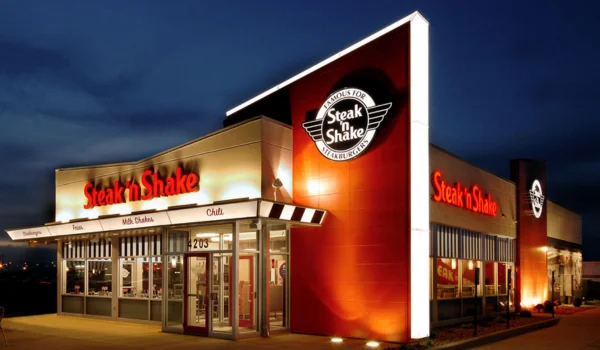
Steak ’n Shake’s franchise model is unique because it offers two distinct pathways — a Franchise Partner model and a Traditional restaurant franchise model. These differ significantly in terms of investment, ownership structure, and financial expectations.
🧩 1. Franchise Partner Model (Low Upfront)
This is the most talked-about path because of its very low upfront investment relative to traditional restaurant franchises:
- Total Investment: $10,000 to become a Franchise Partner of an existing Steak ’n Shake location.
- Franchise Partners operate an existing restaurant but do not purchase the real estate or physical assets outright.
- Franchisees earn a portion of the restaurant’s net profits (historically around 50%) rather than owning the full restaurant as a traditional franchisee.
This model is designed for hands-on, full-time operators rather than passive investors. Franchise Partners must commit to managing the restaurant day-to-day with no other active businesses.
🧩 2. Traditional Franchise Model (Full Ownership)
For entrepreneurs who want full ownership of a Steak ’n Shake restaurant (including lease, build-out, and operations), the investment is significantly higher:
- Initial Franchise Fee: Typically $25,000 (varies by agreement).
- Total Investment Range: Approximately $184,100 – $2,695,052+ depending on location, format (free-standing, inline, non-traditional venue), build-out costs, equipment, and opening inventory.
💡 Tip: The wide investment range reflects differences between a smaller non-traditional location (e.g., airport, university) and a full-size freestanding restaurant.
📊 Ongoing Fees & Royalty Costs
For the traditional franchise model, Steak ’n Shake charges ongoing fees (which you’ll confirm in the Franchise Disclosure Document or FDD):
- Royalty Fee: Typically 1% – 5% of gross sales.
- Advertising Royalty Fee: Approximately 1% – 10% of gross sales (varies by region and agreement).
- Additional fees for technology, training, and operational support may apply depending on the franchising structure.
For the Franchise Partner model, earnings are based on profit sharing rather than traditional royalty percentages — you receive a share of net profits as agreed with corporate.
📈 Profit & Revenue Potential
Understanding profitability is key when evaluating any franchise opportunity.
📌 Traditional Franchise Restaurants
According to Steak ’n Shake’s own estimates:
- Average Unit Volume: Around $1.8M in annual net sales for established franchisee restaurants in continuous operation.
- Profit margins vary widely based on location, traffic, labor, cost control, and menu pricing.
📌 Franchise Partner Model
This model focuses on profit sharing rather than fixed return projections:
- Franchise Partners historically have earned a share of net profits — sometimes around 50% — depending on performance.
- Anecdotal performance data suggests some operators have earned six-figure incomes in their early years — but results vary with management skill and restaurant performance.
👉 Important: Earnings are never guaranteed. They depend on location, customer traffic, operating efficiency, staffing, and market competition.
👔 Eligibility & Financial Requirements
Before applying to become a Steak ’n Shake franchisee or Franchise Partner, you should understand the typical requirements:
📌 Financial Qualifications (Traditional Franchise)
Based on franchising disclosures and industry data:
✔ Minimum Liquid Capital: ~$400,000+
✔ Minimum Net Worth: ~$1,000,000+ (excluding primary residence)
✔ Franchise Fee: $25,000 or as specified in current FDD
Veterans often receive a 20% discount on the franchise fee through the VetFran program.
📌 Franchise Partner Model Eligibility
Unlike traditional franchise requirements (higher financial thresholds), the low-investment model focuses more on operational capability:
✔ Ability to operate the restaurant full-time and hands-on
✔ Commitment to the Steak ’n Shake brand and guest experience
✔ Willingness to undergo on-the-job training prior to ownership
✔ $10,000 initial investment to participate as a Franchise Partner
This path does not support absentee ownership or managing from afar — success is closely tied to your involvement.
🧠 Support & Training
Steak ’n Shake offers comprehensive training and support to help new franchisees and Franchise Partners succeed:
📍 Training Includes:
✔ Multi-week on-site and operational training before you take over a restaurant
✔ Operational support from field-based personnel
✔ Administrative support including payroll and accounting assistance
✔ Marketing guidance and system tools to support sales and brand consistency
For traditional franchisees, the franchisor also assists with site selection, store design, vendor relationships, and pre-opening preparations.
📝 How to Apply
Here’s a clear step-by–step roadmap to apply for a Steak ’n Shake franchise or Franchise Partner role:
- Initial Inquiry
Visit the official Steak ’n Shake franchise page and submit your interest form with basic contact and background information.
- Franchise Disclosure Document (FDD)
Once you’re identified as a potential candidate, you’ll receive the FDD — a legal document that details costs, obligations, fees, and responsibilities. Review it with a franchise attorney or financial advisor.
- Financial Verification
Provide documentation verifying your personal finances — especially for traditional franchising (liquid capital, net worth) or the $10,000 for Franchise Partner eligibility.
- Interview & Evaluation
Steak ’n Shake representatives will interview you to assess operational fit, commitment level, and readiness to run a restaurant.
- Training & Approval
After approval:
✔ Franchise Partners undergo extensive on-the-job training at a company restaurant before taking the reins.
✔ Traditional franchisees complete scheduled training programs and pre-opening workshops.
- Open & Operate
Launch your Steak ’n Shake restaurant or take ownership of a partner restaurant with support from the corporate team.
🍽️ Pros & Cons
👍 Pros
✔ Low-cost entry option through the Franchise Partner model (as low as $10,000).
✔ Legendary American brand with national recognition.
✔ Franchise support, training, and marketing assistance.
✔ Multiple restaurant formats — traditional, non-traditional, inline.
👎 Cons
✖ Traditional full ownership requires strong financial backing (high capital needs).
✖ Profitability varies by location and market.
✖ Franchise Partner role demands hands-on management — not passive ownership.
✖ Some legacy locations faced operational challenges, leading to closures and recovery efforts.
🎯 Final Thoughts
The Steak ’n Shake franchise opportunity stands out in the restaurant franchising world due to its dual model approach — making ownership accessible to passionate operators with limited upfront capital, while still offering a traditional franchise path for larger investors. Whether you pursue the low-entry Franchise Partner model or the full franchise ownership route, the brand’s heritage, flavor legacy, and support systems make it worth considering if you’re serious about entering the fast-casual dining space.
Before moving forward, always review the current Franchise Disclosure Document, speak with existing franchisees, and consult professionals (legal, financial) so you make an informed decision.
About the Author