Many entrepreneurs, especially first-time founders in the United States, use the terms business model and business plan interchangeably. But they are not the same thing.
If you’re starting a company, pitching investors, or trying to grow an existing business, understanding the difference between a business model and a business plan is critical.
As a USA business expert, I’ve seen startups fail not because their idea was bad — but because they misunderstood this difference. Let’s break it down in simple language and clear examples so you can confidently understand how both work and when you need each one.
What Is a Business Model?
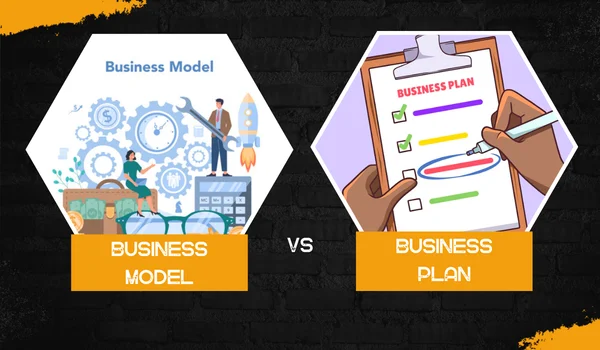
A business model explains:
How your company makes money.
That’s it.
It describes how you create value, deliver value, and capture value (meaning generate revenue and profit).
Think of the business model as the engine of your company. It explains:
- Who your customers are
- What problem you solve
- What you sell
- How you sell it
- How you earn revenue
- What your major costs are
It focuses on logic — not long documents.
Simple Example of a Business Model
Let’s say you open a coffee shop.
Your business model might look like this:
- Target customers: Office workers
- Product: Premium coffee and snacks
- Revenue source: Direct retail sales
- Pricing: $5–$8 per drink
- Costs: Rent, staff wages, supplies
- Profit driver: High customer volume + premium pricing
That’s your business model.
It explains how money flows.
What Is a Business Plan?
A business plan is a detailed written document that explains:
How you will build, operate, and grow your business.
It is much more comprehensive.
A business plan usually includes:
- Executive summary
- Market research
- Industry analysis
- Competitive analysis
- Marketing strategy
- Operational plan
- Financial projections
- Funding requirements
- Risk analysis
The business plan is like the blueprint of a house — detailed and structured.
The Core Difference in One Sentence
Here’s the simplest way to understand it:
The business model explains how you make money.
The business plan explains how you will make that model work.
Business Model vs Business Plan: Side-by-Side Comparison
| Feature | Business Model | Business Plan |
| Purpose | Shows how company makes money | Shows how company will operate & grow |
| Length | Short and conceptual | Detailed and structured document |
| Audience | Founders & internal strategy | Investors, banks, stakeholders |
| Focus | Revenue & value creation | Execution & financial projections |
| Flexibility | Can change quickly | More formal and structured |
Why Many Entrepreneurs Get Confused
Startups often begin with enthusiasm but without clarity.
Many founders write a 40-page business plan without fully thinking about:
- Who exactly their customer is
- Why someone would pay
- How profit margins work
Without a clear business model, a business plan becomes guesswork.
That’s why in the U.S. startup ecosystem, especially in Silicon Valley, founders first test the business model before writing detailed plans.
Understanding Business Model in Depth
A strong business model answers these key questions:
- Who Is the Customer?
Are you selling to:
- Consumers (B2C)?
- Businesses (B2B)?
- Government?
- Niche communities?
Clarity here changes everything.
- What Problem Are You Solving?
Customers don’t buy products.
They buy solutions.
For example:
- Netflix solves boredom and entertainment access.
- Uber solves transportation convenience.
- Amazon solves shopping convenience.
Your model must solve a clear pain point.
- What Is Your Revenue Model?
There are many types of revenue models:
- Subscription (Netflix)
- Commission-based (Uber)
- Advertising-based (Google)
- Freemium (Spotify)
- Direct sales (Retail stores)
- Licensing (Software companies)
Your revenue model defines your money engine.
- What Are Your Key Costs?
Revenue alone means nothing without cost control.
You must understand:
- Fixed costs (rent, salaries)
- Variable costs (materials, shipping)
- Customer acquisition costs
- Operational expenses
Profit = Revenue – Costs.
Understanding Business Plan in Depth
Now let’s look deeper at a business plan.
A business plan is especially important when:
- Seeking bank loans
- Raising venture capital
- Attracting partners
- Applying for government grants
It proves that your idea is realistic and financially viable.
Main Sections of a Business Plan
- Executive Summary
A short overview of your company and goals.
- Market Analysis
- Industry size
- Growth trends
- Target demographics
- Competitor overview
This shows investors that you understand the market.
- Marketing & Sales Strategy
How will you:
- Attract customers?
- Convert leads?
- Retain buyers?
This is your growth plan.
- Operational Plan
Explains:
- Location
- Suppliers
- Technology
- Staffing structure
It shows how daily operations will run.
- Financial Projections
Includes:
- Revenue forecasts
- Expense projections
- Break-even analysis
- Cash flow statements
- Profit & loss statements
This is critical for funding approval.
Real-World Example: Startup Scenario
Let’s say you want to start an online fitness coaching business.
Step 1: Business Model
- Customers: Busy professionals
- Offering: Online personalized workout programs
- Revenue model: $49/month subscription
- Delivery: Mobile app
- Costs: App development, marketing, trainers
- Profit strategy: Recurring subscription growth
That’s your business model.
Step 2: Business Plan
Now you create a document explaining:
- Market size of online fitness industry
- Competitive landscape
- Marketing plan (social media ads, influencers)
- Financial projections for 3–5 years
- Break-even timeline
- Investment needed ($150,000)
That’s your business plan.
Which Comes First?
Always start with the business model.
Why?
Because if the business model is weak, no amount of detailed planning will save the company.
In U.S. startup culture, founders often use tools like:
- Lean Canvas
- Business Model Canvas
These help test assumptions before writing full plans.
When You Only Need a Business Model
You may only need a business model if:
- You are testing an idea.
- You’re self-funding.
- You’re starting small.
- You want quick validation.
Many modern digital businesses operate successfully without formal 40-page business plans.
When You Definitely Need a Business Plan
You need a business plan if:
- Applying for SBA loans
- Raising venture capital
- Attracting angel investors
- Seeking partnerships
- Entering regulated industries
Banks and investors require structure and financial forecasting.
Key Mistakes Entrepreneurs Make
Mistake 1: Writing Plans Without Testing Model
They predict revenue without validating demand.
Mistake 2: Confusing Revenue With Profit
A good business model focuses on profitability — not just sales.
Mistake 3: Overcomplicated Business Plans
Some founders create 80-page documents no one reads.
Clarity beats complexity.
Mistake 4: Ignoring Flexibility
Business models must adapt.
Business plans should update annually.
Markets change quickly in the U.S.
The Strategic Relationship Between Both
Think of it this way:
- Business Model = Strategy
- Business Plan = Execution Blueprint
Both are important.
But they serve different roles.
A company may pivot its business model.
But it rewrites the business plan accordingly.
Modern Trends in the U.S. Market
Today’s entrepreneurs often:
- Start with lean business models
- Test with MVP (Minimum Viable Product)
- Gather customer feedback
- Adjust pricing
- Then create formal plans for scaling
This reduces risk and increases survival rate.
Final Thoughts
Understanding the difference between business model and business plan gives you clarity and confidence as an entrepreneur.
Let’s summarize:
- A business model explains how your business makes money.
- A business plan explains how you will build and grow the business.
- The model is conceptual.
- The plan is detailed and operational.
- The model comes first.
- The plan supports the model.
If you’re starting a business in the United States, focus first on validating your business model. Once you are confident that customers will pay and profit is achievable, then build a structured business plan to scale.
In today’s competitive environment, clarity is power.
And knowing the difference between a business model and a business plan can be the difference between business failure and long-term success.
About the Author