Buying or selling a home in the United States has traditionally been a slow, stressful, and paperwork-heavy process. From uncertain pricing and endless showings to negotiations and delays, real estate transactions often take months to complete.
Opendoor entered this space with a bold promise:
👉 Sell your home online, quickly, and with certainty.
By combining technology, data analytics, and capital, Opendoor introduced a new approach to real estate known as iBuying (instant buying). In this article, we’ll break down the Opendoor business model, explain how it makes money, and analyze why it has disrupted the U.S. real estate market.
What Is Opendoor?
Founded in 2014, Opendoor is a technology-driven real estate company that allows homeowners to sell their homes directly to Opendoor for cash. Instead of listing a home, hosting open houses, and waiting for buyers, sellers receive an instant online offer.
Opendoor also buys homes, makes light repairs, and resells them to buyers through its digital platform.
At its core, Opendoor is not just a real estate company—it’s a data and logistics company operating in real estate.
The Core Idea Behind Opendoor’s Business Model
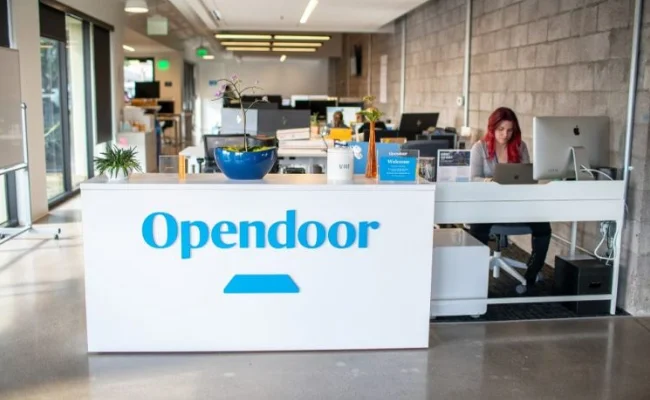
Opendoor operates on an asset-heavy, technology-enabled marketplace model.
It plays three roles:
- Buyer – Purchases homes directly from sellers
- Seller – Resells homes to buyers
- Platform – Manages pricing, transactions, and logistics digitally
The goal is to remove uncertainty and friction from real estate transactions while earning margins through pricing efficiency and service fees.
How Opendoor’s iBuying Model Works (Step-by-Step)
Step 1: Homeowner Requests an Offer
A seller enters their home details on Opendoor’s website:
- Location
- Size
- Condition
- Recent upgrades
Using algorithms and local market data, Opendoor generates a near-instant cash offer.
Step 2: Pricing Through Data & Algorithms
Opendoor uses:
- Comparable sales (comps)
- Market trends
- Neighborhood data
- Property condition inputs
This allows Opendoor to price homes quickly and consistently, reducing human bias.
Step 3: Seller Accepts and Closes Fast
If the seller accepts:
- They choose a closing date (often within days)
- No showings or negotiations
- Minimal paperwork
Sellers pay a service fee, similar to a real estate commission.
Step 4: Opendoor Prepares the Home
After purchasing the home:
- Minor repairs or cleaning
- Inspection-based adjustments
- Standardization for resale
Opendoor avoids major renovations to control costs.
Step 5: Resale to Buyers
Opendoor lists the home on its platform:
- Buyers can tour homes on-demand
- Transparent pricing
- Digital paperwork and financing options
The company aims to resell homes quickly to reduce holding costs.
How Opendoor Makes Money
Opendoor’s revenue comes from multiple sources:
- Service Fees from Sellers
Sellers pay a service fee, typically comparable to traditional agent commissions. This fee covers:
- Convenience
- Speed
- Certainty
This is a primary revenue stream.
- Home Resale Margins
Opendoor aims to buy homes slightly below market value and sell them at or near market prices.
Margins are usually thin, but scale and efficiency make the model viable.
- Ancillary Services
Opendoor also earns from:
- Title services
- Escrow services
- Financing partnerships
These add-ons increase revenue per transaction.
Key Value Propositions
For Sellers:
- Fast cash offers
- No staging or open houses
- Predictable timelines
- Reduced stress
For Buyers:
- On-demand home tours
- Transparent pricing
- Easy digital experience
Opendoor sells certainty and convenience, not just houses.
Why Opendoor’s Model Is Disruptive
- Speed Over Tradition
Traditional home sales can take 60–90 days. Opendoor can close in as little as two weeks.
- Data-Driven Pricing
By relying on data instead of emotion, Opendoor reduces price volatility and negotiation friction.
- End-to-End Digital Experience
From offer to closing, the process is largely online, modernizing a historically offline industry.
Challenges and Risks in Opendoor’s Business Model
Despite its innovation, Opendoor faces significant challenges:
- Market Risk
Housing prices fluctuate. Rapid market downturns can lead to inventory losses.
- Capital Intensity
Opendoor must hold large amounts of inventory, requiring substantial capital and financing.
- Thin Margins
Small pricing errors can erase profits due to low margins per home.
- Local Market Complexity
Real estate is hyper-local. Algorithms must constantly adapt to regional trends.
Competition in the iBuying Space
Opendoor competes with:
- Zillow (previously, before exiting iBuying)
- Offerpad
- Traditional real estate agents
- Hybrid tech-enabled brokerages
Opendoor remains one of the purest plays in the iBuyer category.
Is Opendoor’s Business Model Sustainable?
Opendoor’s long-term success depends on:
- Accurate pricing models
- Tight inventory management
- Controlled operational costs
- Stable housing markets
When markets are predictable, Opendoor performs best. Volatile conditions test the resilience of the model.
What Entrepreneurs Can Learn from Opendoor
- Technology can simplify even traditional industries
- Convenience is a powerful value proposition
- Data-driven decisions outperform intuition
- Scale matters when margins are thin
Opendoor shows that disruption doesn’t always mean eliminating an industry—sometimes it means making it faster and simpler.
Final Thoughts
The Opendoor business model represents one of the boldest attempts to modernize U.S. real estate. By blending data, capital, and digital experiences, Opendoor has changed how millions of Americans think about selling their homes.
While the model carries risk, it also demonstrates the power of technology-led convenience in industries ripe for disruption.
👉 Opendoor isn’t just buying houses—it’s buying time, certainty, and peace of mind.
About the Author