Raising Cane’s Chicken Fingers has become one of America’s most beloved fast-casual food brands. Its laser-focused menu—centered around crispy chicken fingers—has earned a huge and loyal following across the United States and abroad. Over the years, Cane’s has grown into a powerful brand with hundreds of locations, high customer demand, and strong culture recognition.
However, when it comes to franchising today, Raising Cane’s presents a unique and evolving situation. Unlike many restaurant brands that openly sell franchises to independent investors, Cane’s has mostly shifted its growth strategy to company-owned expansion and limited strategic partnerships.
This guide breaks it all down—from historical franchise costs and model structure to why it’s currently not broadly available, and what franchise prospects might look like in the future. Let’s dive in.
🔍 What Is Raising Cane’s? The Brand & Business Concept
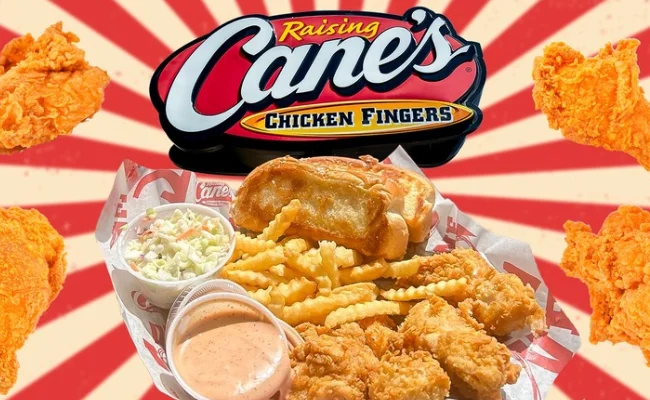
Raising Cane’s, commonly called Cane’s, is a quick-service restaurant chain founded in 1996 in Baton Rouge, Louisiana. The brand’s menu is famously simple—focused on chicken fingers, crinkle-cut fries, coleslaw, Texas toast, and its signature Cane’s Sauce.
This simplicity has been a competitive advantage:
- Faster service times than many larger QSR competitors
- Operational efficiency through a limited menu
- Strong brand loyalty among fans, especially college students
- A consistent experience across locations that customers easily recognize and trust
Cane’s has expanded rapidly and now operates hundreds of locations nationwide and in several international markets. However, unlike many franchise systems, the company has taken a more controlled growth approach focused mainly on corporate ownership rather than selling new franchises broadly.
📌 Franchise Status: Is Raising Cane’s Available for Investors?
As of 2025–2026, Raising Cane’s is not openly accepting new franchise applicants in the U.S. The company has publicly stated that franchising opportunities are limited or paused, as it prioritizes company-owned growth and very selective partner arrangements.
So, if you’re here expecting to fill out a franchise application today—that is unlikely. However, knowing the historical franchise model and costs is still valuable for understanding the business and evaluating similar opportunities.
💰 Historical Cost & Investment Overview (If/When Franchise Relaunches)
Below are the typical financial figures drawn from historical franchise models and industry estimates when Raising Cane’s did offer franchise opportunities.
- Initial Franchise Fee
- Approximately $45,000
This is the one-time fee paid to the franchisor for rights to the Raising Cane’s brand, training, and initial support systems.
- Total Initial Investment
The estimated total investment required to open a Raising Cane’s restaurant historically ranged widely due to location, construction costs, real estate, and build-out factors:
- Estimated Range: ~$768,100 to ~$1,937,500+
(This could extend to $1.5M–$3.0M in some markets or larger projects.)
This investment typically includes:
- Site selection and leasehold improvements
- Construction and kitchen build-out
- Equipment, fixtures, and signage
- Initial inventory
- Training and pre-opening expenses
- Working capital for the first 3–6 months
- Ongoing Fees
If Raising Cane’s franchising were open again, ongoing fees would likely include:
- Royalty Fee: ~5% of gross sales
- Advertising/Marketing Fee: ~2–5% of gross sales
These fees support national marketing campaigns, brand development, and corporate support functions.
- Real Estate & Build-Out Variables
The cost of land or leasehold improvements varies dramatically across cities and real estate markets. Urban locations and high-traffic suburban sites can raise investment significantly compared to smaller markets.
📊 Profit & Revenue Potential
Since Raising Cane’s is not currently franchising broadly, there is no official recent earnings disclosure for franchisee profit. However, when assessing profitability in similar QSR franchises, consider these industry benchmarks:
- Average Unit Volume: Industry sources suggest strong unit sales potential—historically many Raising Cane’s locations achieved high revenues given brand popularity and operational efficiency.
- Profit Margins: QSR restaurant profitability often depends on controlling food costs, labor expenses, and store volume.
- Break-Even Timeline: Most fast-casual restaurants aim to break even within 2–3 years, assuming steady traffic, effective cost control, and strong local marketing efforts.
Keep in mind that actual profit margins are influenced by:
- Rent and lease costs
- Labor expenses (higher in some states)
- Competition and local market demand
- Seasonal demand and marketing effectiveness
👔 Eligibility Requirements (Historical/Indicative)
If Raising Cane’s were to open franchise opportunities again, the following eligibility and financial criteria would likely be expected (based on past estimates):
Financial Thresholds
- Minimum Net Worth: ~$1,000,000+
- Liquid Capital Required: ~$500,000+ (some estimates suggest higher depending on location and size)
Business Experience
- Prior management experience in the restaurant or QSR sector is strongly preferred.
- Strong leadership, operational skills, and capital management experience are critical due to the fast-paced nature of food service.
These requirements are typical for large-scale restaurant franchises, ensuring incoming franchisees have the capacity to handle the financial risk and operational demands of managing a high-volume dining operation.
📈 Pros & Cons: Is This Franchise Worth Considering?
Even if you cannot currently buy a Raising Cane’s franchise, understanding the franchise model helps you evaluate related opportunities.
👍 Pros
✔ Strong, recognized brand with nationwide popularity
✔ Simple menu drives operational efficiency
✔ Loyal customer base and strong social presence
✔ High revenue potential for well-located units
✔ Exclusive niche (focused chicken finger concept)
👎 Cons & Challenges
🔹 Not accepting new franchise applications (as of 2025–2026)
🔹 High initial capital investment
🔹 Operational intensity of a full-service restaurant
🔹 Profit depends heavily on site selection, local competition, and cost control
📌 Why Raising Cane’s Isn’t Franchising Broadly Right Now
There are a few strategic business reasons why Raising Cane’s has reduced or paused traditional franchising:
- Focus on Consistency
Raising Cane’s emphasizes a uniform customer experience. By keeping more restaurants corporate-owned, the company exerts tighter control over quality and operational standards.
- Rapid Growth Through Corporate Expansion
Instead of selling rights, Cane’s has been opening new units independently, capturing market share and maximizing revenue directly.
- Selective Partnerships
In some international markets or specific cases, Cane’s has partnered with select operators to open locations—but these are not typical franchise deals like those offered by many other QSR brands.
📌 What This Means for Potential Investors
If you’re passionate about restaurant franchising or the Raising Cane’s brand:
➡ Stay informed: Market conditions change, and franchise opportunities could reopen in the future.
➡ Look at similar concepts: Competitors like Chick-fil-A, Popeyes, Zaxby’s, and others do offer franchising and may present accessible opportunities.
➡ Evaluate alternative partnerships: Some regions might offer master development deals, international expansion operations, or strategic investments.
📝 Final Thoughts
The Raising Cane’s franchise model has historically shown strong revenue potential and solid brand popularity. However, as of now, the company is not broadly open to new franchise investors in the United States.
Understanding Cane’s investment profile—from franchise fees and startup costs to ongoing expenses and revenue potential—is still extremely valuable. Not only does it provide insights into how successful QSR franchises operate, but it also sharpens your awareness of what top-tier franchise opportunities require in terms of scale, capital, and operational sophistication.
If Cane’s ever reopens its franchise channel—or if you’re exploring similar high-growth QSR franchises—this guide will serve as a strong foundation for your decision-making.
About the Author