Sharks Fish & Chicken is a U.S. quick-service concept focused on fried seafood and chicken combos (think fish fillets, shrimp, wings, and classic sides). It has grown through franchising and positioning itself as an affordable, comfort-food QSR with carry-out, delivery and small dine-in formats — a model that can work well in suburban strip centers, urban carryout corridors, and delivery-first trade areas. The rest of this guide breaks down the numbers and practical steps you should take before investing.
Quick snapshot — the headline numbers
- Franchise fee: $25,000.
- Total initial investment (range): $191,250 – $354,832 (industry listings show roughly the same $190k–$360k band).
- Royalty: 6% of gross sales (typical).
- Ad/Marketing fee: ~2% (reported).
- Approx. franchise units: ~60+ locations (brand listings show ~64 units).
These are the key load-bearing numbers most investors ask about first. Always confirm the latest figures in the franchisor’s current Franchise Disclosure Document (FDD).
About the brand
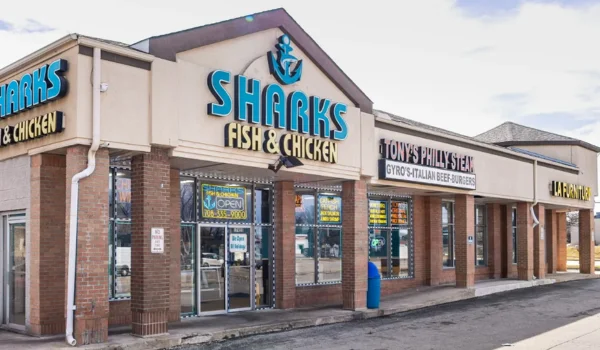
Sharks Fish & Chicken began as a regional fried-seafood and chicken concept and expanded through franchising. It emphasizes value combos (fish, fries, wings), easy operations for carryout/delivery, and menus that appeal to families and late-night diners. The brand operates corporate and franchised locations and keeps a consumer-facing ordering site for pickup/delivery.
Detailed cost breakdown (what to budget for)
The “total initial investment” range reported by franchise directories is broad because it includes many variables (real estate, build-out, equipment, pre-opening payroll, initial marketing, and working capital). Below is a simplified breakdown based on the reported range.
| Cost item | Estimated range (USD) |
| Franchise fee | $25,000. |
| Leasehold improvements / build-out | $50,000 – $150,000 |
| Kitchen equipment (fryers, hoods, refrigerators) | $40,000 – $90,000 |
| Furniture, signage & FF&E | $10,000 – $30,000 |
| Initial inventory & supplies | $5,000 – $15,000 |
| Pre-opening payroll, training & permits | $5,000 – $20,000 |
| Working capital (1–3 months) | $15,000 – $40,000 |
| Total initial investment (reported ranges) | $191,250 – $354,832. |
Note: Different data aggregators report slightly different high/low endpoints; use the FDD (Item 7) to get the franchisor’s official Itemized estimate.
Ongoing fees you’ll pay
- Royalty: ~6% of gross sales (typical, reported).
- Advertising/marketing fund: ~2% of gross sales (reported).
- Possible tech or licensing fees: depends on POS/online ordering arrangements — confirm in the FDD.
These ongoing fees fund corporate support, national/regional marketing campaigns, and brand systems.
Revenue & profit potential — realistic expectations
Sharks does not publish a public Item 19 (financial performance representation) on aggregator pages, so there are no universally published average unit sales you can rely on. That means:
- Ask the franchisor for historical unit sales or Item 19 in the FDD (if available). If Item 19 is not present, request actual unit P&Ls and speak with multiple franchisees.
General QSR guidance you should model:
- Gross sales depend heavily on location, foot traffic, delivery penetration and local competition.
- Margins: Fried-food QSRs commonly aim for 12–20% net margin after food, labor, rent, royalties and advertising — but your results will vary. Use conservative sales assumptions during planning.
Site, format & ideal locations
Sharks works well in formats such as:
- Compact carryout/delivery units (500–1,200 sq ft)
- Fast-casual dine-in locations in strip centers (1,200–2,000 sq ft)
- Food-court or mall kiosks (smaller footprint, different economics)
Best trade areas: suburban shopping centers, busy urban carry-out corridors, near colleges or late-night activity hubs. The franchisor usually provides site criteria and approval process during discovery.
What the franchisor provides (typical support)
According to brand listings and the company site, Sharks provides:
- Initial training and operations manuals.
- Site selection support and opening assistance.
- Marketing templates and brand assets.
Ask for a written list of deliverables (training days, field support visits, opening team assistance) and include them in the franchise agreement.
Pros & cons — quick assessment
Pros
- Lower entry cost than many full-service restaurants (reported min ~ $191k).
- Simpler operations (fryer-focused menu) — easier to train staff.
- Delivery/carryout friendly model — good fit for current demand.
- Established brand with multiple locations and website ordering.
Cons / Risks
- Seafood and fryer menus are sensitive to ingredient price swings (fish/seafood costs).
- Reported royalty/marketing fees (6% + 2%) affect margins.
- Limited public financial performance data — you’ll need franchisee references to validate earnings.
Eligibility & franchisee profile
Typical qualifications franchisors look for:
- Sufficient capital for the total project (see range above).
- Experience in restaurant operations or willingness to hire experienced managers.
- Commitment to follow brand SOPs and local marketing activities.
- Good credit and ability to secure a lease.
Exact minimum net worth / liquid capital thresholds will be in the franchise application packet or FDD.
Due-diligence checklist (must do before signing)
- Request the current FDD and read Item 7 (initial costs), Item 6 (franchise fee), Item 11 (obligations), Item 20 (franchisee list) and Item 19 (if present).
- Speak with at least 3–5 existing franchisees — ask about real sales, out-of-pocket startup overruns, franchisor support and local marketing effectiveness.
- Visit operating locations during peak hours to observe throughput and product consistency.
- Get a site cost estimate (landlord, tenant improvements, permit timeline).
- Build a 12-month cashflow model with conservative sales, seasonal dips, and a cushion for higher food cost.
- Have franchise lawyer & CPA review the agreement and pro-forma.
- Confirm supplier and food cost arrangements — seafood sourcing is key to stable margins.
How to apply / next steps
- Start at the brand website (franchise/contact form) to request the franchise packet and FDD.
- Complete the franchisor’s application and schedule a discovery call.
- Visit an operational unit and speak with franchisees provided in Item 20 of the FDD.
- If satisfied, negotiate site approval milestones and sign.
Final verdict
Sharks Fish & Chicken is a viable mid-market QSR franchise option for investors who want a fryer/seafood-centric concept with a lower entry cost than many full-service restaurants. The published figures (franchise fee $25k; total investment ~$191k–$355k; royalty ~6%; advertising ~2%) make it a concrete option to consider — but because public unit performance data is limited, success depends heavily on location selection, local demand, food cost control, and verifying franchisee results. Always use the FDD and franchisee references as your primary decision inputs.
About the Author