The global transportation industry is undergoing a massive shift as electric vehicles (EVs) become more popular. Governments, consumers, and businesses are all pushing toward cleaner energy solutions, creating new opportunities for companies to build infrastructure for EV charging. Traditional fuel companies are also adapting to this transition.
One interesting example is Parkland Corporation, a large international fuel distributor and convenience retailer. Instead of relying only on gasoline and diesel sales, Parkland is expanding into electric vehicle charging networks as part of its long-term strategy.
The Parkland EV charging business model combines ultra-fast charging infrastructure, retail convenience services, partnerships, and long-term infrastructure financing. In this article, we will explore how this model works, how the company generates revenue, and why EV charging is becoming an important part of Parkland’s future.
Understanding Parkland Corporation
Parkland Corporation is a Canada-based energy company that operates fuel distribution, retail fuel stations, and convenience stores across North America and other regions. The company serves more than one million customers daily through thousands of retail and commercial locations.
Traditionally, Parkland’s core business involved:
- gasoline and diesel fuel sales
- convenience stores
- fuel distribution and logistics
- commercial energy services
However, as the energy sector evolves, the company is investing in renewable fuels, solar energy, and EV charging infrastructure to adapt to the future of mobility.
Why Parkland Is Investing in EV Charging
Electric vehicles are rapidly gaining market share worldwide. As a result, the demand for public EV charging stations is increasing.
Parkland recognized that EV charging represents a major opportunity because:
- EV drivers still need physical charging locations.
- Drivers often spend 20–30 minutes charging, which creates opportunities for retail spending.
- Existing gas station locations are ideal places for charging infrastructure.
By integrating EV charging into its retail network, Parkland is transforming traditional gas stations into multi-energy service hubs.
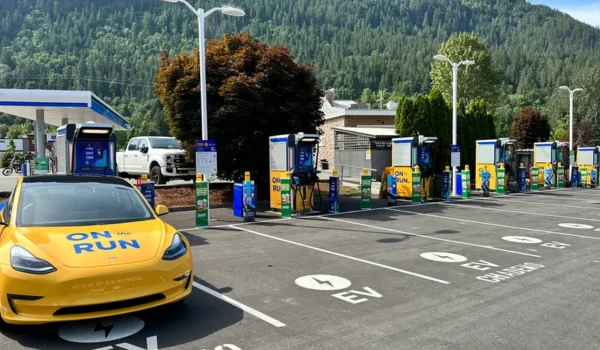
The ON the RUN EV Charging Network
A major part of the company’s strategy is its EV charging network connected to its convenience retail brand.
ON the RUN charging locations are typically installed at Parkland-operated fuel stations.
These stations offer:
- ultra-fast EV chargers
- convenience stores
- restaurants
- restrooms and amenities
Many locations also include restaurants such as:
Triple O’s
This combination creates a complete customer stop experience rather than just a charging station.
Ultra-fast chargers at these locations can charge most electric vehicles in about 20–30 minutes, making them convenient for travelers and commuters.
Core Elements of the Parkland EV Charging Business Model
The Parkland model is built on several key components.
- Co-Location with Fuel Stations
Instead of building completely new locations, Parkland installs EV chargers at its existing fuel stations and retail sites.
These locations already have:
- parking spaces
- convenience stores
- customer traffic
- highway access
This reduces infrastructure costs and allows the company to leverage its existing retail network.
Strategically placing chargers along highways also helps reduce “range anxiety” for EV drivers.
- Ultra-Fast Charging Infrastructure
Parkland focuses on high-power charging technology capable of delivering up to about 200 kW of power, enabling rapid charging for most EV models.
Fast charging is important because:
- drivers prefer shorter charging times
- stations can serve more vehicles per day
- higher utilization increases revenue
To support this infrastructure, Parkland partners with technology providers such as:
FreeWire Technologies
These systems often include battery-integrated chargers that help reduce electricity demand spikes and infrastructure upgrades.
- Retail and Convenience Revenue
One of the most innovative aspects of Parkland’s EV model is retail integration.
Unlike gasoline refueling, EV charging takes longer. This creates a business opportunity because customers often spend time in nearby stores or restaurants while waiting.
Typical revenue sources during charging stops include:
- snacks and beverages
- coffee and fast food
- convenience retail items
- loyalty programs and promotions
By combining EV charging with retail services, Parkland increases average revenue per customer visit.
- Charging Fees
Another important revenue stream is charging fees paid by EV drivers.
Customers typically pay based on:
- charging time
- energy usage (kWh)
- session fees
Drivers can pay using credit cards or digital apps linked to Parkland’s loyalty ecosystem.
The company also offers integrated digital payment and location discovery through the Journie rewards mobile app.
Journie Rewards allows customers to:
- locate charging stations
- pay for charging sessions
- earn loyalty points
- Government Funding and Infrastructure Financing
EV charging infrastructure is expensive to build. To accelerate expansion, Parkland works with government agencies and infrastructure banks.
For example, the company secured up to $210 million in financing from the Canada Infrastructure Bank to support EV charging expansion.
Public funding and incentives help reduce risk and encourage companies to invest in clean energy infrastructure.
- Strategic Network Expansion
Parkland plans to significantly expand its charging network across Canada.
The company intends to install thousands of EV charging ports as part of its long-term growth strategy.
Its goal is to create one of the largest ultra-fast charging networks in Western Canada.
This strategy ensures that Parkland remains relevant as EV adoption increases.
Competitive Advantages of Parkland’s Model
Parkland’s EV charging strategy offers several advantages.
Existing Infrastructure
Because Parkland already owns a large network of fuel stations, it can convert these sites into EV charging locations faster than new competitors.
Retail Ecosystem
Most charging stations are located alongside convenience stores and restaurants.
This allows Parkland to monetize the waiting time during charging.
Strong Logistics and Supply Network
The company already operates large energy distribution and logistics networks, making it easier to manage electricity supply and infrastructure deployment.
Strategic Partnerships
Collaborations with technology providers and government agencies help reduce investment risk and accelerate growth.
Challenges of the EV Charging Business
Despite the opportunities, the EV charging business also faces challenges.
High Infrastructure Costs
Installing ultra-fast chargers requires major investment in equipment, electricity supply, and site upgrades.
Charging Speed Limitations
Even fast chargers require time, which can create queues during busy periods.
EV Adoption Uncertainty
The speed of EV adoption varies by region, which affects utilization rates.
Future Growth Opportunities
The future of Parkland’s EV charging business looks promising.
Several trends could drive growth.
Increasing EV Adoption
As electric vehicles become more common, demand for charging infrastructure will increase dramatically.
Smart Energy Integration
Future charging stations could integrate:
- renewable energy
- battery storage
- smart grid technology
International Expansion
Parkland operates in multiple regions and could expand EV charging networks across new markets.
Final Thoughts
The Parkland Corporation EV charging business model represents a smart evolution of the traditional fuel retail industry. By combining ultra-fast charging infrastructure with convenience retail services, the company is transforming gas stations into multi-energy mobility hubs.
Through partnerships, government funding, and strategic use of existing retail locations, Parkland Corporation is positioning itself as a major player in the electric mobility ecosystem.
As the world transitions toward cleaner transportation, companies that adapt their business models—like Parkland—will likely play a key role in building the infrastructure needed for the future of mobility.
About the Author