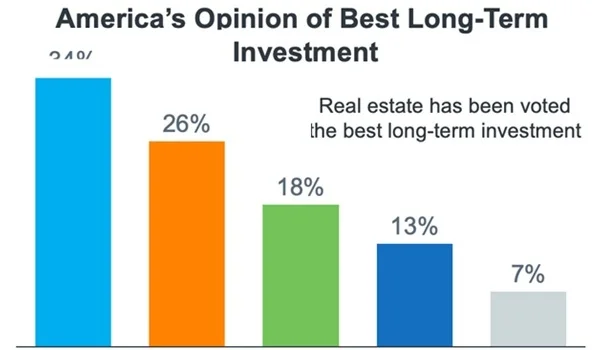
If you’re trying to build wealth in the US, one big question always comes up:
👉 Should you invest in real estate or the stock market?
Both are powerful wealth-building tools. Both have made millions of people rich. But they work very differently—and choosing the wrong one for your situation can slow your financial growth.
In this detailed guide, we’ll break everything down in simple terms so you can decide what’s best for you.
The Big Picture: Real Estate vs Stock Market
At a basic level:
- Real estate = buying physical property (houses, apartments, rentals)
- Stock market = buying shares of companies (like Apple, Google, etc.)
Both generate income and long-term growth—but the journey is completely different.
How Real Estate Investing Works
Real estate investing means buying property to earn money through:
- Rental Income
You buy a house or apartment and rent it out.
Example:
- Rent: $1,500/month
- Expenses: $1,000
- Profit: $500/month
- Property Appreciation
Over time, property value increases.
Example:
- Bought at $300,000
- Sold at $450,000 → Profit: $150,000
Pros of Real Estate Investing
✅ 1. Regular Cash Flow
Rental income can create steady monthly income.
✅ 2. Leverage (Big Advantage)
You can buy property using a loan.
Example:
- Invest $50,000 → Control $300,000 property
✅ 3. Tax Benefits
- Mortgage interest deductions
- Depreciation benefits
- Lower capital gains tax (long-term)
✅ 4. Physical Asset
You own something tangible (land/building).
Cons of Real Estate
❌ 1. High Initial Investment
Down payment + closing costs can be huge.
❌ 2. Low Liquidity
Selling property takes time (months).
❌ 3. Management Hassle
Tenants, repairs, maintenance.
❌ 4. Market Risk (Location-Based)
Prices depend heavily on the local market.
How Stock Market Investing Works
In the stock market, you buy shares of companies and earn through:
- Capital Gains
Stock price increases over time.
- Dividends
Companies pay regular income to shareholders.
Pros of Stock Market Investing
✅ 1. Low Entry Barrier
You can start with as little as $100.
✅ 2. High Liquidity
You can buy/sell instantly.
✅ 3. Passive Investing
No tenants, no maintenance.
✅ 4. Diversification
You can invest in hundreds of companies using ETFs.
Cons of Stock Market
❌ 1. Volatility
Prices can go up and down quickly.
❌ 2. Emotional Investing Risk
Many beginners panic during market crashes.
❌ 3. No Control
You don’t control company decisions.
Real Estate vs Stock Market: Side-by-Side Comparison

| Factor | Real Estate | Stock Market |
| Investment Size | High ($20k–$100k+) | Low ($100+) |
| Liquidity | Low | High |
| Passive Income | Monthly rent | Dividends |
| Risk | Medium (local) | Medium–high (market swings) |
| Effort | High (management) | Low |
| Diversification | Hard | Easy |
| Leverage | Strong | Limited |
Returns: Which One Makes More Money?
Historically in the US:
- Stock market (S&P 500): ~8–10% annual return
- Real estate: ~6–9% (including rent + appreciation)
👉 Important insight:
Stocks often outperform without effort, while real estate can outperform with leverage and active management.
Risk Comparison (Important for Beginners)
Real Estate Risk:
- Bad tenants
- Property damage
- Vacancy
- Local market crash
Stock Market Risk:
- Market crashes (like 2008, 2020)
- Emotional panic selling
- Short-term losses
👉 Key difference:
- Real estate feels “stable” but has hidden risks
- Stocks feel “risky” but are easier to manage
Passive Income: Which Is Better?
Real Estate:
- Monthly rent
- More predictable
- Requires effort
Stocks:
- Dividends (quarterly/monthly)
- Truly passive
- Lower yields typically
👉 Verdict:
- Want active income → Real estate
- Want hands-off income → Stocks
Taxes: Which Is More Tax-Efficient?
Real Estate Advantages:
- Depreciation reduces taxable income
- Mortgage interest deductions
- 1031 exchange (tax deferral)
Stock Market Taxes:
- Capital gains tax
- Dividend tax
👉 Real estate often wins in tax efficiency.
Time & Effort: The Hidden Factor
This is where most beginners go wrong.
Real Estate Requires:
- Property search
- Tenant screening
- Maintenance
- Legal work
Stock Market Requires:
- Basic research
- Occasional portfolio review
👉 If you have a full-time job → stocks are easier.
Who Should Invest in Real Estate?
Real estate is best if you:
✔ Have large capital
✔ Can handle risk + debt
✔ Want monthly cash flow
✔ Are okay with active involvement
✔ Understand local markets
Who Should Invest in the Stock Market?
Stocks are best if you:
✔ Have limited capital
✔ Want passive investing
✔ Prefer liquidity
✔ Can stay invested long-term
✔ Want diversification
Smart Strategy: Why Not Both?
Here’s what most successful US investors do:
👉 They combine both assets.
Example Portfolio:
- 60% Stocks (growth + diversification)
- 40% Real Estate (income + stability)
This gives:
- Growth (stocks)
- Cash flow (real estate)
- Risk balance
Beginner Strategy
If you’re just starting:
Step 1:
Start with stock market (low capital)
Step 2:
Build savings + experience
Step 3:
Invest in real estate later
Common Mistakes to Avoid
❌ 1. Going All-In on One Asset
Diversification is key.
❌ 2. Over-Leveraging in Real Estate
Too much debt = high risk.
❌ 3. Panic Selling Stocks
Market drops are normal.
❌ 4. Ignoring Costs
- Real estate: maintenance, taxes
- Stocks: fees, taxes
Pro Tips from US Investment Experts
- Start early → compounding matters more than timing
- Don’t chase “quick profits”
- Focus on long-term wealth
- Use index funds for stock investing
- Buy property in high-demand areas
Final Verdict: Which Is Better?
There is no one-size-fits-all answer.
👉 Choose real estate if:
- You want monthly income
- You’re okay with active involvement
👉 Choose stocks if:
- You want simplicity
- You prefer passive investing
👉 Choose both if:
- You want the best of both worlds
Conclusion
Real estate and the stock market are not competitors—they are complementary tools.
- Stocks = easy, scalable, passive
- Real estate = powerful, leveraged, income-focused
The smartest investors in the US don’t argue about which is better.
👉 They use both strategically.
About the Author