If you’re planning for retirement in the US, you’ve probably heard about Roth IRA and Traditional IRA. These are two of the most powerful investment accounts—but also one of the most confusing for beginners.
Many people ask:
👉 Which one should I choose? Roth or Traditional?
👉 Which saves more tax?
👉 Which is better for long-term wealth?
Don’t worry—this guide will break everything down in simple, real-life terms so you can make the right decision.
What Is an IRA? (Quick Basics)
IRA stands for Individual Retirement Account.
It’s a special investment account that gives you tax benefits to save for retirement.
You can invest inside an IRA in:
- Stocks
- ETFs
- Mutual funds
- Bonds
The main advantage?
👉 You pay less tax—either now or later.
The Core Difference (Super Simple)
Here’s the easiest way to understand:
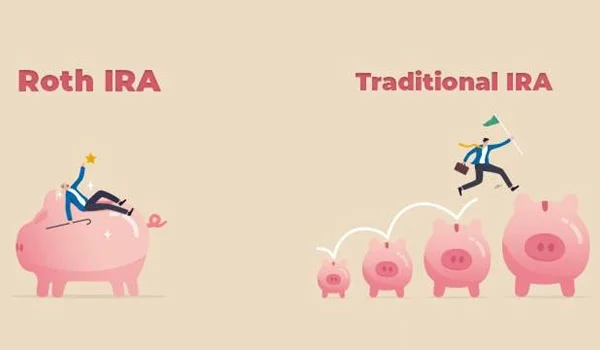
- Roth IRA → Pay tax now, withdraw tax-free later
- Traditional IRA → Save tax now, pay tax later
That’s it. Everything else builds on this idea.
Roth IRA Explained (Beginner-Friendly)
A Roth IRA is funded with after-tax money.
How it works:
- You earn income
- Pay tax on it
- Invest the remaining money in Roth IRA
Big benefit:
👉 When you withdraw in retirement → 100% tax-free
Example (Roth IRA)
- You invest $5,000 today
- It grows to $50,000 over time
- You withdraw $50,000 in retirement
👉 Tax = $0
Pros of Roth IRA
✅ 1. Tax-Free Withdrawals
No tax on gains—huge advantage long-term.
✅ 2. Great for Young Investors
If your income is low today, your tax rate is low.
✅ 3. No Required Withdrawals
Unlike Traditional IRA, you’re not forced to withdraw money later.
✅ 4. Flexible Withdrawals
You can withdraw your contributions anytime (rules apply).
Cons of Roth IRA
❌ 1. No Immediate Tax Benefit
You don’t save tax today.
❌ 2. Income Limits
High earners may not qualify directly.
Traditional IRA Explained
A Traditional IRA is funded with pre-tax money.
How it works:
- You invest money before tax (or claim deduction)
- Your taxable income reduces
- You pay tax when withdrawing in retirement
Example (Traditional IRA)
- You invest $5,000
- You save tax today
- It grows to $50,000
👉 When you withdraw → you pay tax on $50,00
Pros of Traditional IRA
✅ 1. Immediate Tax Savings
You pay less tax today.
✅ 2. Good for High Earners
Useful if you’re in a higher tax bracket now.
✅ 3. Tax-Deferred Growth
Your investment grows without yearly taxes.
Cons of Traditional IRA
❌ 1. Tax on Withdrawals
You pay tax on full amount later.
❌ 2. Required Minimum Distributions (RMDs)
You must withdraw money after a certain age.
❌ 3. Future Tax Risk
Tax rates may increase in future.
Roth IRA vs Traditional IRA (Side-by-Side Comparison)
| Feature | Roth IRA | Traditional IRA |
| Tax Timing | Pay now | Pay later |
| Withdrawals | Tax-free | Taxable |
| Best For | Young / low income | High income today |
| RMDs | No | Yes |
| Flexibility | High | Low |
| Long-Term Benefit | Very high | Moderate |
Which One Should You Choose?
Let’s make this simple based on your situation.
Choose Roth IRA If:
✔ You are young (20s–30s)
✔ Your income is currently low or moderate
✔ You expect higher income in future
✔ You want tax-free retirement
👉 Roth IRA is best for long-term wealth buildin
Choose Traditional IRA If:
✔ You are in a high tax bracket today
✔ You want immediate tax savings
✔ You expect lower income after retirement
👉 Traditional IRA is best for short-term tax relief
Real-Life Example
Case 1: Young Professional
- Age: 25
- Salary: $50,000
👉 Best choice: Roth IRA
Reason: Low tax today, higher income later
Case 2: Mid-Career Professional
- Age: 40
- Salary: $120,000
👉 Best choice: Traditional IRA
Reason: Save tax now
Contribution Limits (2026)
For both Roth and Traditional IRA:
- $7,000 per year (under age 50)
- $8,000 per year (age 50+)
👉 Limits are set by the Internal Revenue Service
Can You Have Both?
👉 Yes, absolutely.
Many smart investors use both accounts.
Strategy:
- Invest in Roth IRA for tax-free growth
- Invest in Traditional IRA for tax savings
This gives you tax diversification in retirement.
Advanced Strategy (Power Tip)
Roth Conversion
You can convert a Traditional IRA into a Roth IRA.
Why do this?
- Pay tax now
- Enjoy tax-free growth later
👉 Useful during low-income years
Common Mistakes to Avoid
❌ 1. Choosing Without Thinking About Taxes
Taxes are the biggest factor.
❌ 2. Not Investing After Opening IRA
Just opening account is not enough—invest the money.
❌ 3. Ignoring Long-Term Impact
Small decisions today = big impact later.
❌ 4. Missing Contribution Deadlines
You lose that year’s tax benefit.
Best Investments Inside IRA
No matter which IRA you choose, invest wisely:
Good Options:
- Index funds (like S&P 500)
- ETFs
- Blue-chip stocks
Avoid:
- Overtrading
- High-risk speculation
Roth vs Traditional: Final Verdict
There is no “one-size-fits-all” answer.
👉 But here’s a simple rule:
- If you think taxes will be higher in future → choose Roth IRA
- If you think taxes will be lower in future → choose Traditional IRA
Final Thoughts
Both Roth IRA and Traditional IRA are powerful tools.
The real mistake?
👉 Not investing at all.
Start early, stay consistent, and let compounding work for you.
Conclusion
- Roth IRA = tax-free future
- Traditional IRA = tax savings today
The best investors don’t just pick one—they choose wisely based on their situation.
About the Author