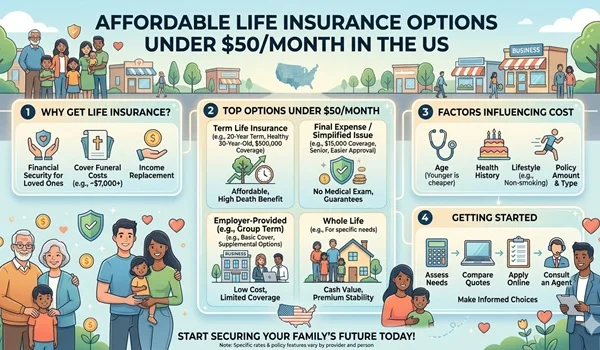
You’re working, paying rent or a mortgage, handling groceries, car payments, and maybe student loans. Life in cities like Dallas, Miami, or New York is already expensive.
Now imagine this:
👉 What happens to your family financially if you’re not there tomorrow?
- Rent or mortgage still needs to be paid
- Kids still need school and daily expenses
- Bills don’t stop
This is where life insurance becomes important.
But when you start researching, you get confused:
👉 “Should I buy term life or whole life insurance?”
Both sound similar—but they are very different.
Choosing the wrong one can cost you thousands of dollars over time.
In this guide, I’ll explain everything in simple English so you can clearly decide what’s best for you and your family.
Step 1: What is Life Insurance?
Life insurance is a contract where:
- You pay a monthly premium
- The insurance company pays your family a large amount if you pass away
👉 Example:
- You pay $30/month
- Coverage: $500,000
This money helps your family survive financially.
Step 2: What is Term Life Insurance?
Term life insurance is the simplest and most affordable option.
How it works:
- Covers you for a specific period (10, 20, or 30 years)
- If you pass away during that term → payout is given
- If you outlive the term → policy ends
Example:
You’re 30 years old in Texas:
- 20-year term policy
- Coverage: $500,000
- Monthly cost: ~$25–$40
👉 Very affordable
Key Benefits of Term Life
✔ Low cost
✔ High coverage
✔ Easy to understand
Downsides
❌ No savings or investment component
❌ Coverage ends after term
Step 3: What is Whole Life Insurance?
Whole life insurance lasts your entire life.
How it works:
- Covers you permanently
- Includes a “cash value” savings component
- Premium is much higher
Example:
Same person (age 30):
- Coverage: $500,000
- Monthly cost: $300–$600
👉 Much more expensive than term life
Key Benefits of Whole Life
✔ Lifetime coverage
✔ Builds cash value (like savings)
✔ Fixed premiums
Downsides
❌ Very expensive
❌ Lower returns compared to investing
❌ Complex structure
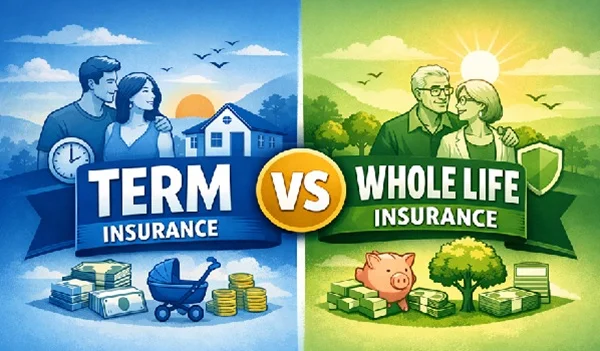
Step 4: Side-by-Side Comparison
| Feature | Term Life Insurance | Whole Life Insurance |
| Cost | Low | High |
| Coverage Duration | Fixed (10–30 yrs) | Lifetime |
| Cash Value | No | Yes |
| Simplicity | Easy | Complex |
| Best For | Most families | High-income/long-term planning |
Step 5: Real-Life Example (USA Scenario)
Let’s compare two people:
Person A (Term Life)
- Pays $30/month
- Coverage: $500,000
- Invests extra $300/month separately
After 20 years:
👉 Investment grows significantly
Person B (Whole Life)
- Pays $350/month
- Coverage: $500,000
- Small cash value growth
👉 Less flexibility, higher cost
👉 In most cases, Person A builds more wealth.
Step 6: When Should You Choose Term Life?
👉 Term life is best if:
- You have kids
- You have a mortgage
- You want affordable protection
- You’re on a budget
Example:
Young family in Chicago
👉 Needs protection, not expensive plans
Step 7: When Should You Choose Whole Life?
👉 Whole life may make sense if:
- You are high-income
- You want lifetime coverage
- You’ve already maxed out retirement accounts
- You want estate planning
Step 8: Best Companies in the US
Here are some trusted providers:
State Farm
✔ Strong reputation
✔ Good for both term & whole life
Haven Life
✔ Best for term life
✔ Easy online process
Ethos
✔ No medical exam options
Prudential
✔ Flexible options
Step 9: Smart Strategies
- Buy Term + Invest the Difference
This is the most popular strategy.
👉 Save money on premiums
👉 Invest extra money
- Match Term Length to Needs
- 20–30 years → ideal for families
- Review coverage every few years
Increase coverage if income grows.
- Keep it simple
Avoid complicated policies unless necessary.
Common Mistakes to Avoid
❌ Buying whole life too early
Too expensive for beginners.
❌ Underestimating coverage
Your family may struggle financially.
❌ Not comparing policies
Prices vary between companies.
❌ Mixing insurance with investment
Insurance should protect—not replace investing.
❌ Waiting too long
Premiums increase with age.
Simple Decision Rule
If you’re confused, follow this:
👉 90% of people should choose term life insurance
👉 Whole life is for advanced financial plannin
FAQs
- Is term life better than whole life?
For most people, yes—because it’s cheaper and simpler.
- Can I convert term life to whole life?
Some policies allow conversion later.
- What happens after term ends?
You can renew or buy a new policy (cost may be higher).
- Is whole life a good investment?
Usually not. Returns are lower than stock market investments.
- How much coverage do I need?
👉 10–15x your annual income is a good rule.
Final Action Plan (What You Should Do Next)
If you’re ready to choose the right life insurance:
Step 1:
Decide your coverage
👉 10–15x your income
Step 2:
Choose term life (20–30 years)
Step 3:
Compare quotes from:
- Haven Life
- Ethos
- State Farm
Step 4:
Apply online and get covered
Step 5:
Invest the money you save
Final Thought
Life insurance is about protecting your family—not making things complicated.
👉 Term life = simple, affordable protection
👉 Whole life = expensive, long-term strategy
If you’re just starting:
👉 Keep it simple.
👉 Choose term life.
👉 Invest the difference.
Start today—because the best time to protect your family is now.
About the Author