Imagine this: You live in New York, your account balance shows $50, and you swipe your debit card for groceries worth $60. The transaction goes through—but later, you’re charged a $35 overdraft fee. Now that $10 shortage just cost you $45.
This is how millions of Americans lose money every year.
Overdraft fees are one of the most common—and avoidable—bank charges in the US. According to recent estimates, Americans pay billions of dollars annually in overdraft and non-sufficient funds (NSF) fees.
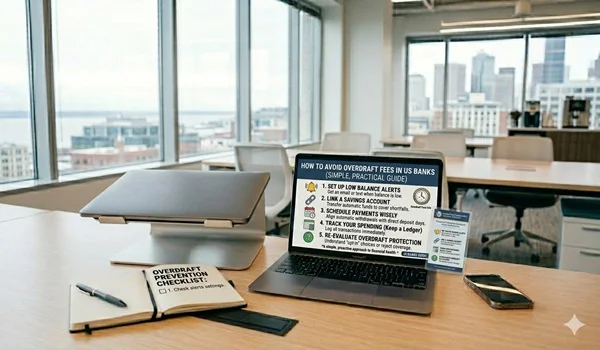
The good news? You can completely avoid these fees with simple habits and smart tools.
In this guide, I’ll explain step-by-step strategies, real-life examples, mistakes to avoid, and practical tips to help you never pay an overdraft fee again.
What Is an Overdraft Fee?
An overdraft happens when you spend more money than you have in your bank account.
Instead of declining the transaction, the bank covers the extra amount temporarily—and charges you a fee.
Example:
- Your balance: $100
- You spend: $120
- Overdraft: $20
- Fee: $30–$35
👉 Total cost = $50+ for just a $20 shortage
Step-by-Step: How to Avoid Overdraft Fees
Let’s break this down into simple, actionable steps.
- Turn OFF Overdraft Protection (Very Important)
Many banks automatically enroll you in overdraft protection.
If you opt out, your card will simply be declined instead of charging you a fee.
Why this helps:
- No surprise fees
- Better spending discipline
Real Example:
In Los Angeles, many users prefer declining transactions rather than paying $35 per mistake.
👉 Call your bank or change settings in your mobile app.
- Set Up Low Balance Alerts
Almost every US bank offers free alerts via SMS or email.
How it works:
- Set alert at $50 or $100
- You get notified before your balance drops too low
Best Practice:
- Set multiple alerts (e.g., $100 and $25)
👉 This is one of the easiest ways to stay safe.
- Link a Backup Account (Overdraft Protection Transfer)
Instead of paying a fee, your bank can transfer money from:
- Savings account
- Another checking account
Example:
- You overspend by $30
- Bank transfers $30 from savings
- Fee: $0 or small ($5–$10)
- Keep a Small Buffer Balance
Always keep a “safety cushion” in your account.
Suggested buffer:
- Minimum: $100
- Ideal: $200–$500
Why it works:
It protects you from:
- Timing issues (pending payments)
- Forgotten subscriptions
- Track Your Spending Weekly
Don’t rely only on your bank balance.
Some transactions (like gas, hotels, or tips) take time to process.
Tip:
- Check your account 2–3 times per week
- Track upcoming bills manually
- Use Budgeting Apps
Apps help you control spending and avoid overdrafts.
Popular options:
- Mint
- YNAB (You Need A Budget)
- EveryDollar
These apps:
- Show real-time balances
- Track expenses
- Alert overspending
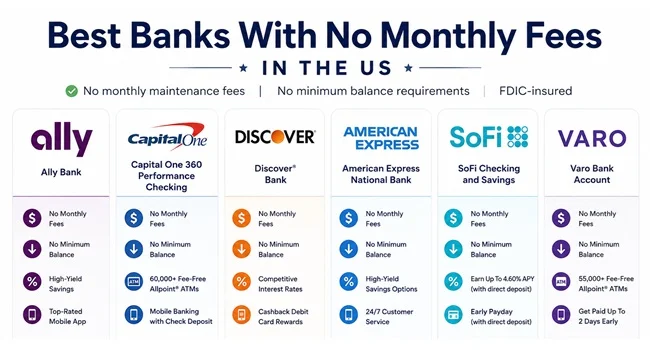
- Choose a Bank With No Overdraft Fees
Some US banks have eliminated overdraft fees completely.
Comparison Table:
| Bank | Overdraft Fee | Special Feature |
| Chime | $0 | SpotMe feature (fee-free overdraft up to limit) |
| Capital One | $0 | No overdraft fees, free alerts |
| Ally Bank | $0 | Covers overdrafts without fees |
| Wells Fargo | ~$35 | Charges fee unless covered |
| Bank of America | ~$35 | Charges fee per transaction |
👉 Switching banks can save you hundreds of dollars yearly.
- Time Your Bills Carefully
Many overdrafts happen due to poor timing.
Example:
- Salary comes on 5th
- Rent auto-debits on 3rd
👉 Result: Overdraft
Solution:
- Adjust payment dates
- Or keep extra balance before billing cycle
- Avoid Multiple Small Transactions
Each transaction can trigger a separate fee.
Example:
- 3 small purchases → 3 overdraft fees
👉 Total fees = $90+
Tip:
If balance is low, stop using your debit card immediately.
- Understand “Pending Transactions”
Pending transactions can confuse your real balance.
Example:
- Available balance: $100
- Pending charges: $80
👉 Actual safe balance: $20
👉 Always check “available balance,” not just total balance.
Smart Strategies to Stay Safe
Here are some expert strategies used by financially smart Americans:
✔ Use Credit Card for Emergencies
Instead of overdrafting:
- Use a credit card
- Pay later without penalties (if managed well)
✔ Maintain Separate Accounts
- One for bills
- One for spending
✔ Automate Savings
Automatically move money to savings weekly—this builds a buffer.
Common Mistakes to Avoid
Avoid these costly habits:
❌ Ignoring Bank Notifications
You miss alerts → balance drops → fees charged
❌ Relying Only on Memory
Forgetting subscriptions like Netflix or gym memberships
❌ Not Checking Account Regularly
Leads to surprises
❌ Keeping Zero Balance
Even a $1 mistake can cost $35
❌ Using Debit Card Without Tracking
Easy to overspend unknowingly
Real-Life Scenario
John lives in Chicago and earns $2,500/month.
Before:
- No alerts
- No buffer
- Paid $140 in overdraft fees in 2 months
After following these steps:
- Set alerts
- Kept $200 buffer
- Switched to Chime
👉 Result: Zero overdraft fees in 6 months
FAQs
- What happens if I don’t pay an overdraft fee?
The bank may:
- Deduct from your next deposit
- Charge additional fees
- Report negative balance if unpaid
- Can I get overdraft fees refunded?
Yes. Many banks (like Bank of America) may refund 1–2 times per year if you request politely.
- Is overdraft protection good or bad?
It can be useful, but:
- With fees → bad
- With free transfer → good
- Which banks have no overdraft fees?
Good options:
- Chime
- Capital One
- Ally Bank
- Can overdraft affect my credit score?
Usually no—but if unpaid and sent to collections, it can harm your credit.
Final Action Plan (What You Should Do Next)
If you want to completely avoid overdraft fees, follow this simple plan:
Step 1:
Turn OFF overdraft coverage in your bank settings
Step 2:
Set low balance alerts at $100 and $25
Step 3:
Keep a minimum $200 buffer in your account
Step 4:
Track your account 2–3 times per week
Step 5:
Consider switching to a no-fee bank like Chime or Capital One
Final Thoughts
Overdraft fees are not just small charges—they are financial traps that can quietly drain your money.
The good news is:
👉 You don’t need more income to avoid them
👉 You just need better systems and habits
Start today with just one step—set alerts or build a buffer—and you’ll already be ahead of most people.
Your goal is simple:
Never let your balance go negative again.
About the Author