One Injury Can Stop Your Income Overnight
Imagine this.
Sarah, a 34-year-old marketing professional in Denver, Colorado, earns $5,000 a month. She has rent, car payments, student loans, and daily expenses.
One day, she slips on ice and injures her back. The doctor tells her she can’t work for 4–6 months.
Now the problem begins:
- Income: $0
- Rent: $1,800/month
- Bills + groceries: $2,000/month
- Savings: Only $3,000
Within weeks, she’s drowning in bills.
This is where disability insurance becomes a financial lifesaver.
In the US, many people insure their car, home, and even phones—but forget to insure their income, which is actually their biggest asset.
In this guide, I’ll explain disability insurance in simple English—what it is, who needs it, how it works, and how to choose the right plan.
What Is Disability Insurance?
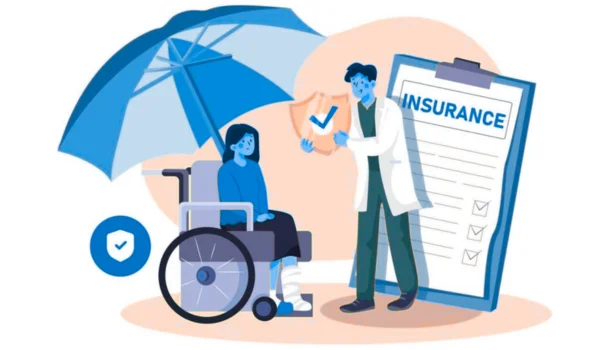
Disability insurance is a type of coverage that replaces part of your income if you can’t work due to injury or illness.
Simple idea:
👉 If you can’t work, it pays you monthly money.
How Does It Work? (Step-by-Step)
Let’s keep it practical.
Step 1: You Buy a Policy
You pay a monthly premium (like $30–$200 depending on coverage).
Step 2: You Get Sick or Injured
Example:
- Car accident
- Surgery recovery
- Chronic illness
Step 3: Waiting Period (Elimination Period)
You wait a certain number of days before benefits start:
- 30 days
- 60 days
- 90 days
Step 4: You Receive Monthly Payments
Insurance pays you typically:
👉 50%–70% of your income
Example:
- Salary: $5,000/month
- Benefit: $3,000/month
Types of Disability Insurance in the US
- Short-Term Disability Insurance (STD)
- Covers: A few weeks to 6 months
- Example: Recovery after surgery
- Cheaper option
- Long-Term Disability Insurance (LTD)
- Covers: Several years or until retirement
- Example: Serious injury or illness
- More comprehensive
- Employer-Provided Disability Insurance
Many companies offer basic coverage.
But beware:
- Often limited (40%–60% income)
- May not be enough
- Individual Disability Insurance
You buy it yourself.
Benefits:
✔ More control
✔ Better coverage
✔ Portable (you keep it even if you change jobs)
Who Needs Disability Insurance?
This is the most important question.
You likely need it if:
- You Depend on Your Income
If your paycheck stops, can you survive?
👉 If the answer is NO → you need it.
- You Have Monthly Expenses
Example in New York City:
- Rent: $2,500
- Food: $800
- Transport: $300
Without income, this becomes a crisis quickly.
- You Don’t Have Large Savings
If you don’t have 6–12 months of savings, you’re at risk.
- You Work in a Physical Job
Examples:
- Construction worker
- Nurse
- Delivery driver
Higher risk = higher need.
- Even Desk Workers Need It
Surprisingly, even office workers need it.
Why?
- Back pain
- Mental health issues
- Chronic illnesses
These can prevent you from working too.
Who Might NOT Need It?
You may not need disability insurance if:
- You are retired
- You have large passive income
- You have 2–3 years of savings
But for most working Americans → it’s essential.
Real-Life Example
Let’s say:
You live in Chicago, Illinois
Salary: $60,000/year ($5,000/month)
You get injured and can’t work for 6 months.
Without disability insurance:
- Income loss: $30,000
With disability insurance:
- Monthly benefit: $3,000
- Total received: $18,000
👉 That’s a huge financial difference.
Disability Insurance vs Emergency Savings
| Feature | Disability Insurance | Emergency Fund |
| Purpose | Long-term income protection | Short-term expenses |
| Duration | Months to years | Usually 3–6 months |
| Reliability | Continuous payments | Limited |
| Cost | Monthly premium | No cost (but needs savings) |
👉 Best strategy: Use both together
How Much Does It Cost in the US?
Typical cost:
- 1% to 3% of your annual income
Example:
- Salary: $60,000
- Cost: $600–$1,800/year
👉 About $50–$150/month
Key Features to Compare Before Buying
- Benefit Amount
How much monthly income you’ll receive.
- Benefit Period
How long payments last:
- 2 years
- 5 years
- Until age 65
- Elimination Period
Waiting time before benefits start.
👉 Longer wait = lower premium
- Definition of Disability
This is VERY important.
- Own occupation: You can’t do your specific job
- Any occupation: You can’t do any job
👉 Always prefer own occupation
- Riders (Extra Features)
Examples:
- Cost-of-living adjustment (COLA)
- Partial disability coverage
- Future income increase option
Smart Tips Before Buying
- Buy Early
Younger = cheaper premiums.
- Don’t Rely Only on Employer Plan
It may not be enough.
- Check Waiting Period Carefully
Make sure it matches your savings.
- Understand Policy Terms
Especially exclusions and definitions.
- Work With a Trusted Agent
They can help you compare policies.
Common Mistakes to Avoid
Mistake 1: Thinking “It Won’t Happen to Me”
Disabilities are more common than people think.
Mistake 2: Relying Only on Savings
Savings run out—insurance keeps paying.
Mistake 3: Ignoring Mental Health Coverage
Some policies exclude it.
Mistake 4: Choosing Cheapest Policy
Cheap plans may have poor coverage.
Mistake 5: Not Reading Fine Print
This can lead to claim rejection.
Strategies to Use Disability Insurance Wisely
Strategy 1: Combine STD + LTD
Short-term for immediate needs
Long-term for serious situations
Strategy 2: Match Coverage With Expenses
Calculate your monthly expenses and insure accordingly.
Strategy 3: Build Emergency Fund Alongside
Cover the waiting period with savings.
Strategy 4: Review Every Few Years
Update coverage as income grows.
Frequently Asked Questions
- Is disability insurance really necessary?
Yes—if you depend on your income, it’s one of the most important protections.
- How much coverage should I get?
Aim for 60%–70% of your monthly income.
- Does it cover all illnesses?
Most do, but some exclude pre-existing conditions or mental health—check details.
- Can I get disability insurance without a medical exam?
Some policies allow it, but they may cost more or offer less coverage.
- What’s better: employer or individual plan?
Employer plans are good, but individual plans offer better and more reliable coverage.
Final Conclusion: What Should You Do Next?
Disability insurance is not just another expense—it’s income protection.
In the US, your ability to earn money is your biggest financial asset. If that stops, everything else—rent, bills, loans—becomes a problem.
Your action plan:
- Calculate your monthly expenses
- Check your current coverage (employer plan, if any)
- Decide how much income you need protected
- Compare at least 2–3 disability insurance policies
- Buy a plan that covers at least 60% of your income
👉 Simple rule:
“If your income stops, how long can you survive?”
If the answer is less than 6 months, you should seriously consider disability insurance.
Take action today—because accidents and illnesses don’t come with a warning, but financial protection can.
About the Author