Your 30s are one of the most powerful decades for building wealth.
You’re likely earning more than in your 20s, your career is stabilizing, and you still have 25–35 years before retirement. That combination—time + income + compounding—is what creates serious financial growth.
Yet many people delay investing because of responsibilities like rent, family, or loans.
Here’s the reality:
👉 Starting in your 30s can still make you financially free—if you do it right.

In this complete US guide, you’ll learn:
- Where to invest (accounts + assets)
- How much to invest
- Step-by-step strategy
- Common mistakes to avoid
- Real-life examples
Why Your 30s Are Critical for Retirement Investing
Let’s understand the power of time.
Example:
- Start investing at 30 → invest $500/month
- Average return: 8%
- By age 60 → ~$750,000+
Wait 10 more years (start at 40)?
👉 You may end up with almost half that amount.
That’s the power of compounding.
Step 1: Set Your Retirement Goal
Before investing, define your target.
Ask yourself:
- At what age do I want to retire? (60, 65, early retirement?)
- What monthly income will I need?
Simple rule:
👉 Aim for 25x your annual expenses
Example:
- Annual expense: $40,000
- Retirement goal: $1,000,000
Step 2: Build a Strong Financial Base
Before investing heavily, secure your foundation.
✔ Emergency Fund
- Save 3–6 months of expenses
✔ Pay High-Interest Debt
- Credit cards (very important)
✔ Get Insurance
- Health + life insurance
👉 Without this, investments can collapse during emergencies.
Step 3: Use the Right Retirement Accounts (US)
This is where most people go wrong—they invest but miss tax benefits.
🟢 1. Employer 401(k) Plan
A 401(k) is one of the best retirement tools.
Key benefit:
👉 Employer match = FREE money
Example:
- You invest 5% salary
- Employer adds 5%
That’s a 100% return instantly.
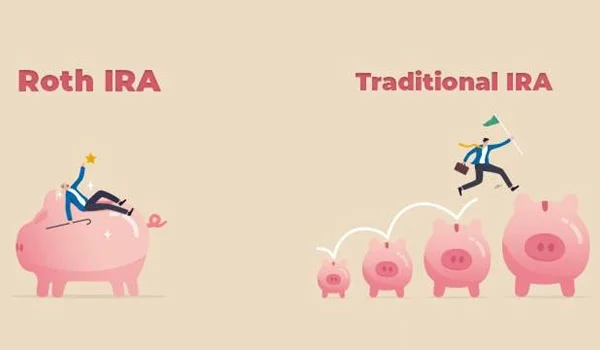
🟡 2. Roth IRA
A Roth IRA is ideal for long-term tax-free growth.
Benefits:
- Tax-free withdrawals
- No required withdrawals later
- Great for long-term wealth
Contribution limits are set by the Internal Revenue Service.
🔵 3. Traditional IRA
Good for tax savings today.
- Reduces taxable income
- Tax paid during retirement
🟣 Ideal Order of Investment
Follow this sequence:
- 401(k) (up to employer match)
- Roth IRA
- Back to 401(k) (max it out)
- Taxable investment account
Step 4: Choose the Right Investments
Now let’s talk about where your money should go.
🟢 1. Index Funds (Best for Most People)
These track the overall market.
Example:
- S&P 500 Index
Why choose index funds:
- Low fees
- High diversification
- Proven long-term returns
🟡 2. ETFs (Flexible & Low Cost)
Exchange-Traded Funds are similar to index funds but trade like stocks.
🔵 3. Stocks (Optional)
If you have knowledge, invest in strong companies like:
- Apple Inc.
- Microsoft Corporation
Keep this portion limited (10–20%).
🟣 4. Bonds (For Stability)
As you age, increase bond allocation.
In your 30s:
- Stocks: 70–80%
- Bonds: 20–30%
Step 5: Decide How Much to Invest
Golden Rule:
👉 Invest at least 15–20% of your income
If possible:
- Start with 10%
- Increase every year
Example:
Salary: $60,000/year
- 15% investment = $9,000/year
- = $750/month
Step 6: Automate Your Investments
Make investing automatic.
Why?
- No emotional decisions
- Consistency
- Discipline
Set up:
- Auto-debit to 401(k)
- Monthly Roth IRA contribution
Step 7: Use Dollar-Cost Averaging
Invest regularly regardless of market conditions.
Benefit:
- Reduces risk
- Takes advantage of market dips
Step 8: Increase Investments Over Time
As your income grows:
- Increase contribution
- Avoid lifestyle inflation
👉 More income should mean more investing—not just more spending.
Real-Life Example
Person A:
- Starts at 30
- Invests $500/month
Person B:
- Starts at 40
- Invests $500/month
👉 Person A ends up with significantly more wealth—even investing the same amount.
Common Mistakes to Avoid
❌ 1. Starting Too Late
Time is your biggest advantage.
❌ 2. Not Using Tax-Advantaged Accounts
You lose huge tax savings.
❌ 3. Overcomplicating Investments
Keep it simple—index funds work best.
❌ 4. Panic Selling
Market crashes are normal.
❌ 5. Not Increasing Contributions
Staying at same level limits growth.
Pro Tips for Investing in Your 30s
- Focus on growth assets (stocks)
- Avoid unnecessary debt
- Stay invested long-term
- Rebalance portfolio yearly
- Keep fees low
Sample Portfolio for 30s Investors
| Asset | Allocation |
| Index Funds | 50% |
| ETFs | 20% |
| Individual Stocks | 10% |
| Bonds | 20% |
Retirement Milestones (Rough Guide)
By age 30 → 1x your salary
By age 40 → 3x your salary
By age 50 → 6x your salary
The Power of Compounding (Mindset Shift)
Compounding is your best friend.
Even small investments grow huge over time.
👉 $500/month can turn into hundreds of thousands.
Final Thoughts
Your 30s are not late—they are perfect timing.
You have:
- Time to recover from mistakes
- Income to invest
- Opportunity to build serious wealth
Conclusion
Retirement investing is not about luck—it’s about discipline.
👉 Start early
👉 Invest consistently
👉 Stay patient
If you follow these steps, your future self will thank you.
About the Author