You work hard. You earn your paycheck. But after paying rent, groceries, gas, insurance, and maybe student loans, there’s not much left.
If you live in cities like Chicago, Atlanta, or Los Angeles, you already know how expensive life can be. Even saving $200–$500 per month feels like progress.
Now when you finally save some money, another question comes up:
👉 “Where should I invest this safely?”
Stocks feel risky. Real estate feels expensive.
That’s where bonds come in.
Bonds are one of the safest and most stable ways to invest in the US, especially for beginners who want steady income without big risks.
In this guide, I’ll explain everything step-by-step in simple English so you can start investing in bonds—even with small money.
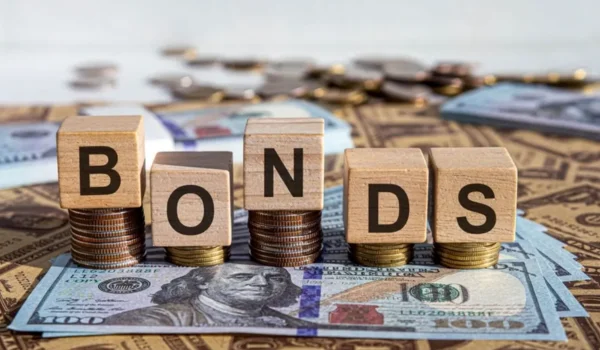
Step 1: What Are Bonds?
A bond is basically a loan you give to the government or a company.
In return:
- They pay you interest (income)
- They return your money after a fixed time
Example:
You buy a $1,000 bond with 5% interest
👉 You earn $50 per year
👉 After a few years, you get your $1,000 back
Types of Bonds in the US
- Government Bonds (Safest)
Issued by the US government via U.S. Department of the Treasury
Examples:
- Treasury Bills (short-term)
- Treasury Notes (2–10 years)
- Treasury Bonds (20–30 years)
✔ Very safe
✔ Backed by US government
- Municipal Bonds (Tax-Friendly)
Issued by cities or states like California or Texas.
✔ Interest often tax-free
✔ Good for high-income earners
- Corporate Bonds (Higher Returns)
Issued by companies like Apple or Microsoft
✔ Higher interest
❌ Slightly more risk
Step 2: How Bonds Make You Money
There are 2 main ways:
- Interest Income
You earn fixed payments (monthly, quarterly, or yearly)
- Price Appreciation
If interest rates drop, bond prices go up
👉 You can sell for profit
Step 3: Ways to Invest in Bonds (Beginner-Friendly)
- Buy Directly from the Government
You can buy bonds from TreasuryDirect
How it works:
- Create free account
- Buy Treasury bonds online
- Start with as little as $100
Best for:
✔ Safe investing
✔ Beginners
- Bond ETFs (Easiest Way)
Bond ETFs are funds that invest in many bonds.
You can buy them using apps like Robinhood
Examples:
- Total bond market ETFs
- Treasury bond ETFs
Benefits:
✔ Diversified
✔ Easy to buy/sell
✔ Low cost
- Bond Mutual Funds
Similar to ETFs but managed by professionals.
Best for:
✔ Hands-off investors
- Buy Individual Corporate Bonds
You can buy through brokers like Fidelity Investments
Best for:
✔ Experienced investors
✔ Higher income
Step 4: Comparison Table
| Type of Bond | Risk Level | Return | Minimum Investment | Best For |
| Treasury Bonds | Very Low | Low | $100 | Safety seekers |
| Municipal Bonds | Low | Medium | $1,000+ | Tax savings |
| Corporate Bonds | Medium | Higher | $1,000+ | Income seekers |
| Bond ETFs | Low–Medium | Medium | $10–$100 | Beginners |
Step 5: Step-by-Step Plan to Start
Step 1: Decide Your Goal
Ask yourself:
- Do you want safety? → Treasury bonds
- Do you want income? → Corporate bonds
- Do you want simplicity? → ETFs
Step 2: Choose Platform
- Government bonds → TreasuryDirect
- ETFs → Robinhood
- Full-service → Fidelity Investments
Step 3: Start Small
👉 Begin with $100–$500
👉 Learn how it works
Step 4: Build a Bond Portfolio
Example:
- 50% Treasury bonds
- 30% Bond ETFs
- 20% Corporate bonds
Step 6: Smart Strategies
- Ladder Strategy (Very Popular)
Instead of investing all money at once:
- Buy bonds with different maturity dates
- Example:
- 1-year
- 3-year
- 5-year
👉 This gives regular cash flow + reduces risk
- Mix Bonds with Stocks
Don’t invest only in bonds.
Example:
- 60% stocks
- 40% bonds
👉 Balanced portfolio
- Use Bonds for Stability
When stock market falls, bonds help protect your money.
Step 7: Practical Example
Let’s say you invest:
- $5,000 in Treasury bonds at 4%
👉 Earn $200/year - $5,000 in bond ETF at 5%
👉 Earn ~$250/year
👉 Total: $450/year passive income
Useful Tips
✔ Start early
Even small investments grow over time
✔ Check interest rates
Bond prices depend on rates
✔ Reinvest interest
This increases returns over time
✔ Diversify
Don’t invest in just one bond
Common Mistakes to Avoid
❌ Ignoring inflation
Low-return bonds may lose value in real terms
❌ Putting all money in long-term bonds
You may get stuck if interest rates rise
❌ Not diversifying
Single bond = higher risk
❌ Selling too early
Bonds work best when held long-term
❌ Chasing high yields blindly
High return = higher risk
Real-Life Scenario (USA Example)
Imagine you’re a 30-year-old in Texas:
- Monthly savings: $500
- You invest:
- $300 in stocks
- $200 in bonds
👉 Bonds give stability
👉 Stocks give growth
After 10 years:
👉 You build a strong, balanced portfolio
FAQs
- Are bonds safe in the US?
Yes, especially Treasury bonds—they are backed by the US government.
- How much money do I need to start?
You can start with as little as $100 via TreasuryDirect
- Can I lose money in bonds?
Yes, but risk is much lower than stocks. Bond prices can fluctuate.
- Are bonds better than stocks?
Bonds are safer but give lower returns. Stocks give higher growth.
- Do bonds pay monthly income?
Some bonds and bond funds pay regular income (monthly or quarterly).
Final Action Plan (What You Should Do Next)
If you’re ready to start investing in bonds, follow this simple plan:
Step 1:
Open an account on TreasuryDirect
👉 Buy your first Treasury bond ($100–$500)
Step 2:
Download an app like Robinhood
👉 Invest in a bond ETF
Step 3:
Build a balanced portfolio
👉 Combine bonds + stocks
Step 4:
Stay consistent
👉 Invest every month
Final Thought
Bonds may not make you rich overnight—but they protect your money and provide steady income.
If used correctly, they are one of the most powerful tools in your financial journey.
👉 Start small
👉 Stay consistent
👉 Build stability first, then growth
That’s how smart investors win in the long run.
About the Author